
At the portfolio level, we provide coaching to women and immigrant founders. In doing so, they are able to present a compelling opportunity for investment to our co-investors and traditional venture capital firms. This way, when they receive investment, the narrative is one of a high-quality company with a high-caliber management team receiving venture capital investment -rather than a female-founded or immigrant-founded business receiving capital reserved specifically for them. This storytelling creates a more meaningful shift in the broader venture capital ecosystem
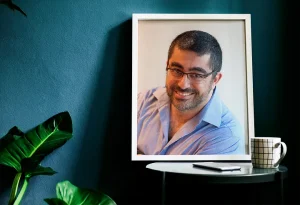
As a part of our series about “Social Impact Investors”, I had the pleasure of interviewing Mike Davis.
Mike Davis is the founding partner of Olive Tree Ridge, a multi-strategy asset management firm and investment bank on a mission to bridge the gender and immigrant wealth gap. Mike started his career in consulting before becoming a serial entrepreneur, starting up 13+ companies primarily in the financial services and e-commerce sectors.
Mike holds an M.B.A. from INSEAD and a B.S. in Computer Engineering from Purdue University.
Thank you so much for joining us! Can you tell us the “backstory” that brought you to this career path?
far back I can remember, I have always been a serial entrepreneur, having started my first business in my dorm room at Purdue University. Along the way, I’ve had the opportunity to learn and grow from each of my different startups. Each of these startups set out to overcome a looming challenge that I perceived in the market.
Zuga, one of my early startups, for example, allowed Chilean parents to spend more time with their children rather than having to go to multiple stores to find the correct sized diapers. MPOWER Financing, on another hand, addresses the challenges that high-potential international students who come to the US to study face when trying to finance their education. Banks in the U.S. do not lend to this population, so my co-founder and I decided to fill that void. The company is thriving today and continues its growth trajectory.
Since 2019 I have become myopically focused on the next challenge — why does the wealth gap exist and what can be done about it? I did not set out to create a multi-strategy asset management firm and investment bank. Preferring action over words, I set out to simply help women and immigrants create and maintain wealth. Our majority-control buyout private equity strategy is simply one tool that enables that. Similarly, our investment banking business helps this often overlooked and vulnerable population access both equity and debt capital markets.
What I find the most fulfilling about this work are the tangible results we are able to produce as a result of creative thinking, problem solving and hard work. Plus, a little bit of luck never hurts.
Can you share a story of your most successful Angel or VC investment? In your opinion, what was its main lesson?
This is a difficult question to answer because all my investments are like my children. I don’t have a favorite! I invest in businesses all over the world that are addressing very real challenges in their local markets.
The main lesson here is in lived experience. If you take product-market fit for example, the main difference between companies that achieve that fit and those who struggle to do so is in the lived experience. Effectively, founders who create businesses to address the challenges they face are more likely to succeed. MPOWER, for example, was able to scale the marketplace because both my co-founder and I personally experienced the very challenge MPOWER addresses. MPOWER loans do not depend on co-signers since most international students do not have U.S.-citizen co-signers who are willing or able to help them take loans. So we removed that requirement. Simple.
Similarly, at Olive Tree Ridge, we help founders access capital markets. We do this because, prior to my own experience, I was quite intimidated by the notion of raising outside money to grow my business. There are others just like me — immigrants to this country who find U.S. capital markets intimidating. Unsurprisingly, we have no shortage of folks who seek our advice and guidance.
Can you share a story of an Angel or VC funding “failure” of yours? Is there a lesson or take away that you took out of that that our readers can learn from?
I still have the scars from one such learning opportunity, which taught me the importance of mission, vision and values alignment. Ensuring your mission and vision align with the entrepreneurs you are investing in is critical. It is a marathon, not a sprint, with plenty of decisions that need to be made along the way. The important distinction here is mission, vision, and values-alignment is different from groupthink. Groupthink primarily occurs when people of similar backgrounds co-create in a vacuum. When people of shared mission, vision and values co-create, the end-state is a shared outcome. But the “how we get there” is informed by a diverse set of lived experiences and backgrounds. There is an important lesson here: if you are lucky enough to work with folks whose mission and visions are aligned with yours — there is no limit to the success you can achieve together. The converse is severely limiting and likely unrecoverable.
Was there a company that you turned down, but now regret? Can you share the story? What lesson did you learn from that?
Projects have come across my desk that I did not fully understand — and certainly there will be more.. Since I try to stay in my lane, there have been several projects I’ve passed on. But I’m not sure I would call that regret. The lesson here is you have to remain committed to lifelong learning. Continue to seek to understand that which you don’t. This way, you will be less likely to miss out on valuable opportunities. Of course there are a limited number of hours in the day and your ability to prioritize will constantly be challenged as a result.
Ok let’s jump to the main focus of our interview. According to this article in Fortune, only 2.2% of VC dollars went to women in 2018. Can you share with our readers what your firm is doing to help close the VC gender gap?
I am so glad this question is being asked! In our early-stage venture strategy, through VilCap Investments (VCI), we focus on answering an important question: how do we democratize access to venture capital?
At VilCap Investments, 46% of our portfolio companies are female-led. Similarly, when you dig into the statistics of venture capital dollars directed to founders of color, 38% of our portfolio companies in the U.S. are founders of color. We have achieved these results because when we started the fund in 2014, we set out with the intention to be the change we wanted to see. It is reflected in the mission, vision, values and, in this case, our fund thesis.
Can you recommend 5 things that need to be done on a broader societal level to close the VC gender gap. Please share a story or example for each.
The way we think about it at Olive Tree Ridge is three-fold: at the fund level, the portfolio level and company level.
At the fund level, we think about creating career pathways for women to become investment professionals themselves. These paths range from junior roles all the way to general partners. In our Asset Management business we support the creation of new funds led by women and immigrant emerging fund managers. We do this by removing the traditional barriers to new fund creation. We support fundraising activities, including raising the funds on their behalf. But we also provide support in funding GP commitments and invite them to benefit from our existing relationships with fund administrators, auditors, accountants and banking institutions. By taking this nurturing approach, we are affecting systemic change. Rather than creating a single new fund by a single new emerging manager, we are creating a pathway for a generation of new funds and emerging fund managers.
At the portfolio level, we provide coaching to women and immigrant founders. In doing so, they are able to present a compelling opportunity for investment to our co-investors and traditional venture capital firms. This way, when they receive investment, the narrative is one of a high-quality company with a high-caliber management team receiving venture capital investment -rather than a female-founded or immigrant-founded business receiving capital reserved specifically for them. This storytelling creates a more meaningful shift in the broader venture capital ecosystem.
And lastly, at the company-level, so much more can be done to attract and retain high-caliber women in positions of authority, thereby increasing the investment-grade nature of the business itself. These include:
● Creating a culture of safety and security around idea sharing,
● Implementing gender-neutral company policies that are supportive of family,
● Developing career pathways for returning-to-work mothers at all seniority levels within the company
You are a person of great influence. If you could inspire a movement that would bring the most amount of good to the most amount of people, what would that be? You never know what your idea can trigger.
I would call the movement #ShowUp #NoFilter: I am a dad, a husband and an investment professional — in that order. My kids appreciate when I am present. My wife appreciates when I am present (I think). And my investors, companies and founders appreciate when I am present. The people you have chosen to surround yourself with deserve your full attention.
The second hashtag, #NoFilter, is about showing up authentically. If my three-year-old is not feeling well, that is going to impact the way that I show up — and I am authentic about that. Conversely, if I am mid-diligence on a deal, my wife understands that I will likely be distracted in our evening check-in. My ability to influence is directly related to bringing my entire self to each situation — it’s very real. But it is difficult and requires demonstration of vulnerability. Notably, it is something that took many years and I only recently demonstrated comfort in doing it.
Can you please give us your favorite “Life Lesson Quote”? Can you share how that was relevant to you in your life?
The “Man In The Arena” speech by Theodore Roosevelt, which I’ve quoted below, has always resonated with me. Oftentimes, our biggest critics and challengers are not from our peers — the ones that understand the challenges we’re going through — but rather the spectators. The greats did not start out great. They achieved exceptional levels of accomplishment by committing to continuous improvement. As I do the hard work of continuous improvement in my life, I think of this quote to push through and stay on course.
“It is not the critic who counts; not the man who points out how the strong man stumbles, or where the doer of deeds could have done them better. The credit belongs to the man who is actually in the arena, whose face is marred by dust and sweat and blood; who strives valiantly; who errs, who comes short again and again, because there is no effort without error and shortcoming; but who does actually strive to do the deeds; who knows great enthusiasms, the great devotions; who spends himself in a worthy cause; who at the best knows in the end the triumph of high achievement, and who at the worst, if he fails, at least fails while daring greatly, so that his place shall never be with those cold and timid souls who neither know victory nor defeat.”
Some of the biggest names in Business, VC funding, Sports, and Entertainment read this column. Is there a person in the world, or in the US whom you would love to have a private breakfast or lunch with, and why? He or she might see this, especially if we tag them.
I would like to name two: Suzanne Shank and Mellody Hobson.
Suzanne has had an incredible career and a fascinating set of lived experiences. I would be keen to learn about and from her experiences. Engineer turned finance professional turned entrepreneur, Suzanne is leading one of the most respected municipal bond underwriting firms on Wall Street. I would be curious to learn how she thinks about capital deployment at scale to remove barriers for women and immigrants.
Mellody Hobson is another woman I respect immensely, owing to her focus on financial literacy and her ability to lead by influence. While I have not yet been asked to be on the board of the scale of companies she is involved with, I would be curious how she thinks about affecting change through influence from the unique vantage point of board-level positions at large companies.
Thank you so much for this. This was very inspirational, and we wish you only continued success!